Most businesses don’t fail at technology because they bought the wrong software. They fail because every tool got chosen in isolation, a project management app here, a new phone system there, cloud storage added because a competitor mentioned it, none of it connected to an actual strategy. A few years in, the result isn’t a technology plan. It’s a pile of individually reasonable decisions that don’t talk to each other.
That gap shows up clearly in the data. According to Deloitte’s Private Company Outlook survey, companies with $500 million or more in annual revenue were far more likely to report real ROI from their digital investments (64%) than smaller companies (just 11%). The technology itself wasn’t the differentiator. The ability to plan, sequence, and actually execute a coherent strategy was.
Why Good Tools Don’t Automatically Add Up to a Good Strategy
It’s tempting to think technology strategy is just a matter of buying the right products. It isn’t. A business can have modern hardware, a capable cloud setup, and a solid cybersecurity tool, and still be operating without any real strategy at all, if nobody’s ever stepped back to ask how those pieces are supposed to work together, or what the business actually needs three years from now versus what felt urgent last quarter.
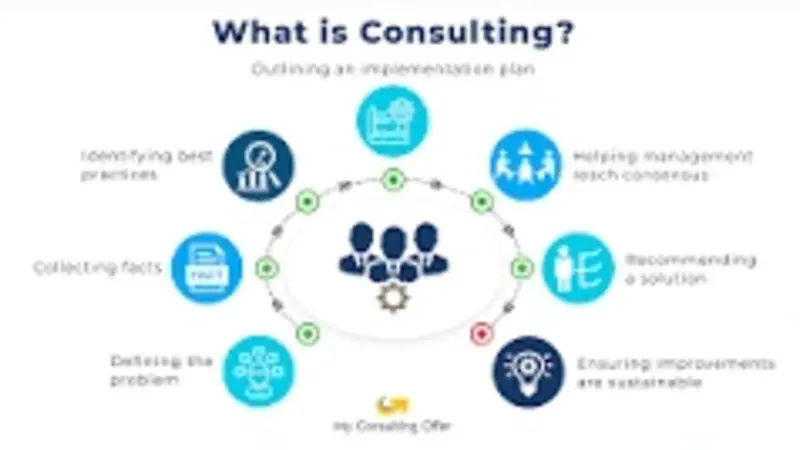
This is exactly the gap real IT consulting is meant to close. Rather than reacting to whatever feels broken this month, a genuine consulting relationship means someone is actually mapping technology decisions against where the business is actually headed, not just what’s on sale or what a vendor pitched hardest.
What This Looks Like for a Business That’s Never Had It
For a company that’s grown organically without formal IT guidance, bringing in real IT consulting in Yakima usually starts with an honest inventory: what’s actually running, what’s genuinely outdated, and where the business is exposed without realizing it. That assessment alone tends to surface a handful of quiet risks, an unpatched system, a backup process nobody’s actually tested, a tool two different departments are paying for separately without knowing it.
From there, a real strategy gets built around priorities instead of symptoms: what needs fixing now because it’s a genuine risk, what can be planned for over the next year, and what’s a nice-to-have that doesn’t deserve this year’s budget at all.
Why This Matters More as a Business Grows
A five-person company can often get away with ad hoc technology decisions. A fifty-person company usually can’t, not because the tools stopped working, but because the cost of a wrong decision scales with headcount, data volume, and how much the business actually depends on things working reliably every single day.
This is where ongoing IT consulting tends to earn its value most clearly. Security requirements shift. Compliance expectations change depending on the industry. New tools emerge that genuinely could help, and plenty more that are just noise. Having someone whose job is tracking all of that, rather than asking an already-busy internal team to become technology strategists on top of their actual jobs, is often the difference between a business that adapts smoothly and one that’s constantly playing catch-up.
The Cost of Treating Technology as an Afterthought
Businesses that skip this step don’t usually notice the cost immediately. It shows up gradually: a system outage that costs a full day of productivity, a security gap that only gets discovered after something’s already gone wrong, a tool that quietly stopped fitting the business two years ago but nobody’s had time to reevaluate. None of these individually feels like a strategic failure. Together, they’re exactly what happens when technology decisions never had a strategy behind them in the first place.
Where Local Context Actually Helps
There’s also a practical argument for working with IT consulting in Yakima specifically rather than a distant, generic provider: someone who actually understands the regional business landscape, from agriculture-adjacent operations to healthcare providers to local manufacturers, brings context that a one-size-fits-all remote provider often can’t. Response times matter when something breaks. So does having a provider who’s been serving the same community long enough to understand its specific mix of businesses, not just technology in the abstract.
Building a Strategy That Actually Holds Up
The businesses that get real value out of their technology aren’t necessarily spending the most. They’re the ones treating IT consulting as an ongoing part of how the business plans, not a one-time project that happens once and gets revisited only when something breaks. That shift, from reactive purchasing to genuine strategy, is really the entire value a good consulting relationship provides.
Technology will keep changing regardless of whether a business has a plan for it. The only real choice is whether that change gets navigated deliberately, with real IT consulting guiding the decisions, or absorbed reactively, one unplanned fix at a time.