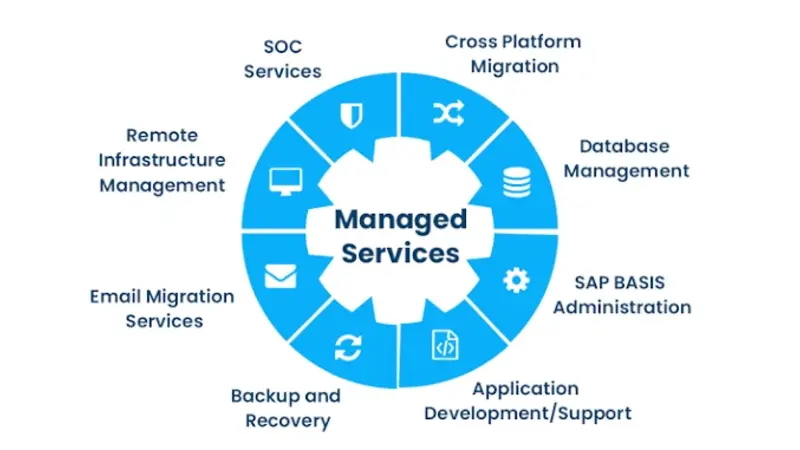
Why Managed Cloud Services Are Becoming a Business Essential
A decade ago, moving to the cloud was often framed as an optional upgrade, something a forward-looking company did to get ahead of competitors still running everything on local servers. That framing has largely flipped. For most growing businesses today, the question isn’t really whether to use cloud infrastructure. It’s whether that infrastructure is actually being managed well enough to support the business, or simply running in the background without anyone paying close attention to it.
That shift matters because “in the cloud” and “well managed” are two different things entirely. A business can technically operate cloud-based systems while still experiencing the same problems that plagued on-premises setups: unpatched vulnerabilities, untested backups, unpredictable costs, and nobody clearly accountable for keeping the whole environment running smoothly. Businesses treating cloud infrastructure as essential aren’t just asking whether they’re in the cloud. They’re asking whether that infrastructure is managed with the same rigor as any other core business function.
Why the Baseline Has Moved
Several forces have pushed managed cloud infrastructure from a competitive advantage to a baseline expectation. Remote and hybrid work means employees need reliable access to systems from wherever they’re working, not just from a single office network. Client and partner organizations increasingly expect data to be handled securely regardless of where a business is physically located. And the sheer volume of day-to-day business activity, communication, transactions, and recordkeeping now happens through systems that simply don’t function the same way without dependable cloud infrastructure behind them.
None of that means every business needs the most advanced cloud architecture available. It means the businesses that treat cloud management as optional are increasingly out of step with what clients, employees, and regulators now expect as a matter of course, not as an exceptional standard.
What Changes When Cloud Infrastructure Is Treated as Essential
| Cloud as an Afterthought | Cloud as Core Infrastructure |
| Migrated once, rarely revisited | Actively monitored and optimized on an ongoing basis |
| Security treated as a checkbox during setup | Security maintained continuously as threats evolve |
| Costs reviewed rarely, if ever | Costs tracked and right-sized against actual usage |
| Downtime treated as an occasional inconvenience | Downtime actively minimized through proactive monitoring |
| No clear owner responsible for the environment | A dedicated team accountable for reliability and performance |
The right column requires ongoing attention, not a one-time project. That distinction is exactly what separates businesses that treat cloud infrastructure as genuinely essential from those that simply moved systems there and moved on.
The Cost of Treating Cloud Infrastructure as an Afterthought
Businesses that migrate to the cloud without ongoing management tend to discover the gap gradually rather than all at once. Costs creep upward as unused resources accumulate. Security gaps widen as configurations drift without regular review. Performance issues surface during periods of peak demand because nobody was monitoring capacity closely enough to anticipate them. None of these individually looks like a crisis. Collectively, they represent exactly the kind of quiet, compounding risk that undermines the reliability a business assumed it already had once it moved to the cloud in the first place.
Working with cloud services in Dallas built around ongoing management, rather than a one-time migration project, closes that gap directly. The value isn’t primarily in the initial move to the cloud. It’s in the continuous oversight that keeps the environment secure, cost-efficient, and reliable well after the migration itself is finished.
What Businesses Should Expect From Managed Cloud Infrastructure
A genuinely managed cloud relationship goes beyond keeping systems running. It includes proactive monitoring that catches performance or security issues before they escalate, regular cost reviews that prevent unused capacity from quietly accumulating, and a documented disaster recovery plan that’s actually been tested rather than assumed to work. It also includes clear, understandable reporting, so business leadership knows what’s being protected, what’s been optimized, and what risks remain rather than trusting that everything is fine by default.
Questions Worth Asking About Current Cloud Management
- Is the cloud environment actively monitored, or was it set up once and left largely untouched since?
- Has anyone reviewed cloud costs recently to confirm the business isn’t paying for unused capacity?
- Would a disaster recovery plan actually work if tested today, or has it never been verified?
- Is there a clear point of accountability for the cloud environment, or does responsibility sit with whoever happens to notice a problem first?
A business that struggles to answer these clearly is likely treating cloud infrastructure as a completed project rather than the ongoing essential function it has become.
The Businesses Getting This Right
The companies treating cloud infrastructure as genuinely essential aren’t necessarily the most technologically advanced. They’re the ones who recognized that moving to the cloud was the beginning of a relationship with that infrastructure, not the end of one. That shift in mindset, from a completed migration to an ongoing responsibility, is what separates businesses quietly falling behind on reliability and cost efficiency from the ones building infrastructure that actually supports where the business is headed.
As more of daily operations, client relationships, and regulatory obligations run through cloud-based systems, the businesses still treating that infrastructure as optional are the ones most likely to discover, at an inconvenient moment, just how essential it had already become.
That discovery rarely happens gradually. It tends to arrive all at once, during an outage that lasts longer than expected, a security incident that reveals how little anyone had actually been monitoring, or a client audit that asks for evidence of practices nobody had gotten around to documenting. By that point, the cost of catching up is almost always higher than the cost of having treated the infrastructure as essential from the start.